Profile
Intellectual Formation

My academic journey was never a straight line but a branching path that embodied a holistic view of human knowledge — a journey that spanned diverse fields. I began with the study of architecture, and in parallel, driven by a longstanding passion, I took up the study of Arabic language and literature, earning a licence in 1990, before completing my bachelor's degree in architectural engineering in 1992. Since questions of thought had always drawn me toward the realm of philosophy, I pursued its study as well, earning a licence in 1994 and following it with a postgraduate diploma in 2000. As my interest in understanding the human being deepened, I completed a postgraduate diploma in psychology in 2006. Nor was that the end of the journey, for I crowned this path with a master's degree in urban planning in 2016. This multiplicity was not a luxury but a reflection of an inner yearning and an expression of a firm conviction in the unity of knowledge — where language complements thought, and architecture complements the human psyche, together forming a coherent vision for understanding humanity and its relationship to place.
This academic formation, undertaken at two distinguished universities — the Lebanese University and Beirut Arab University — was never separate from a parallel process of self-education that accompanied me throughout: a personal library of hundreds of books and journals in thought, philosophy, sociology, and the arts. To this day, I continue to widen this horizon through continuous learning, from foreign languages to artificial intelligence tools, keeping myself in living contact with the questions of the present and its possibilities.
Professional Formation
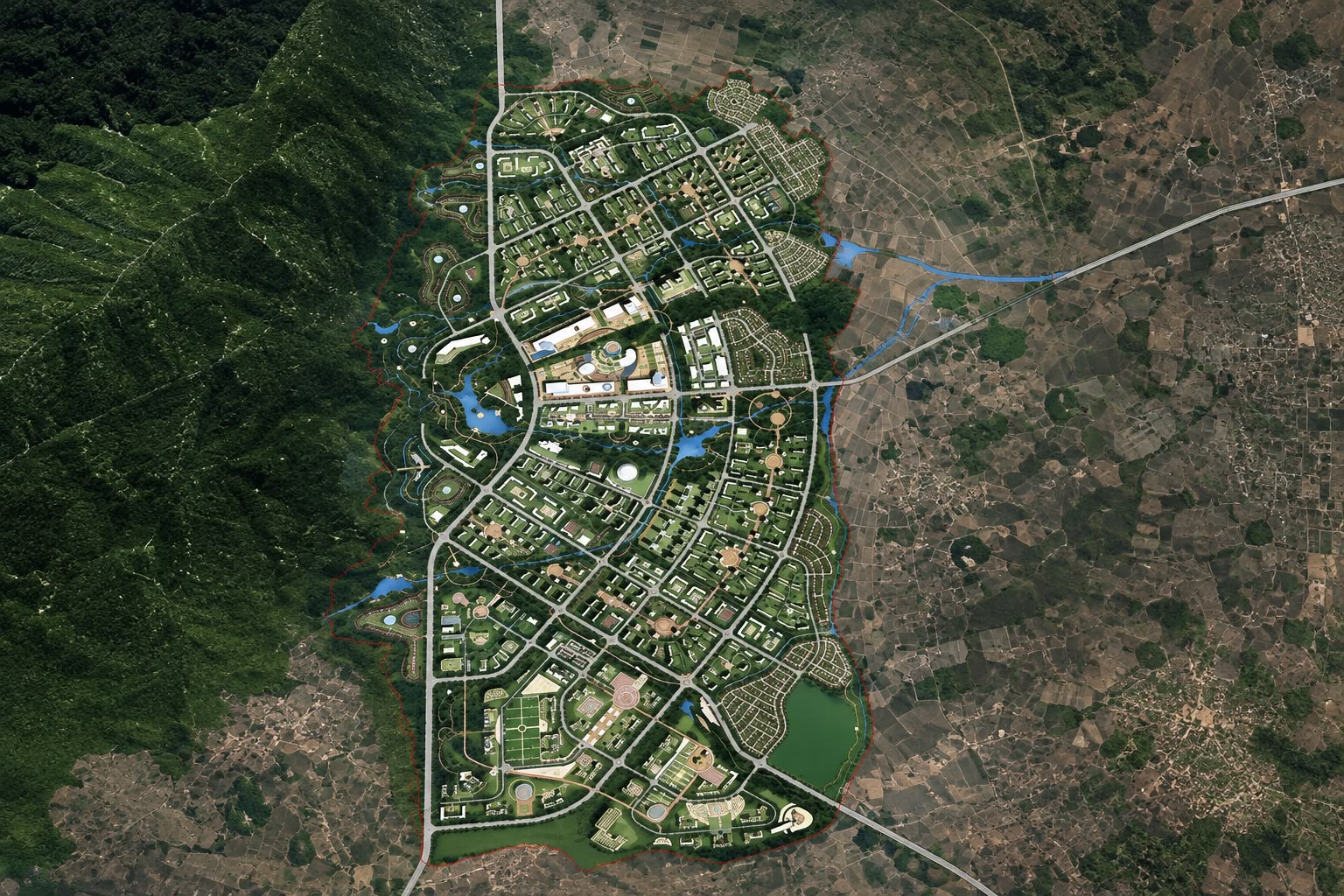
Over more than thirty years, I have gone through diverse professional experiences that combined architectural design with urban planning. I began my career as an independent architect in 1992, then moved into the public sector, joining Lebanon's Directorate General of Urban Planning in 2000, where I continue to work to this day. During this period, I took part in specialized national committees and contributed to the preparation of master plans, and I participated in training courses both inside and outside Lebanon, which allowed me exposure to leading international experiences.
These accumulated experiences gave me the ability to bridge theory and practice. Alongside this, I opened up at one stage to the world of teaching, so as to remain in direct contact with rising generations, believing that knowledge is renewed and made complete only when it is transmitted and exchanged.
Civic and Social Engagement
My belief that knowledge cannot be complete without civic commitment drove me to become engaged in public work, drawing inspiration from the example of my father, who was a social pioneer. From this legacy, from an early age, I developed a concern for active participation in public affairs. In 1998, with the first municipal elections held in Lebanon after the civil war, I won a seat on the Barja municipal council and took up the position of vice-president. Over thirty months, I sought to put forward constructive ideas and options that would shape urban policies and lay out plans for the town's advancement. Yet the prevailing climate at the time prevented the change we sought from being realized, so I chose to resign, convinced that reform can only take root in a favorable environment.
Even so, the drive to advance my community never faded; it remained present, guiding my path. Over the years I followed municipal initiatives and elections closely, believing that local authority is the primary incubator of change, and that injecting new blood into its veins is a path toward shaping realistic and achievable alternatives.
In 2010, together with a group of colleagues, I founded the association "Barja al-Ghad" (Barja Tomorrow), which I chaired and whose magazine, "Ghaduna" (Our Tomorrow), I edited, to serve as a platform reflecting people's ambitions and aspirations.
Yet this civic experience gave me a view more firmly rooted in reality, and made it clear that the moment of change had not yet arrived; what we witnessed over two and a half decades produced neither a local authority possessing the makings of a genuine reformer, nor a society prepared to seize the opportunity and embark on the sought-after historic moment. Thus the ambition for change remained suspended between incapable institutions and a social environment not yet ready to gamble on transformation.
Intellectual Journey
My intellectual formation did not follow a single, continuous path; rather, it passed through a decisive turning point that reordered my relationship with knowledge and with the world. I grew up in a home filled with books, amid a vibrant cultural atmosphere that, from an early age, contributed to building an advanced awareness and opened before me the horizon of questioning and inquiry. This intellectual environment was not merely an accumulation of reading, but an inner drive to search for an idea I could live by, embody in my daily life, and find in it meaning for the self and for the world around me.
In that first stage, I found myself drawn to the "Sahwa" (Islamic Awakening) current, which was then at the height of its influence — not out of coercion or blind conformity, but in response to an inner need for belonging and meaning, and for a framework that would lend the world moral and intellectual coherence. In this context, I sought to give this choice a logical and rational character, and to build an interpretive system that would grant it inner consistency. Yet a hidden sense of unease continued to accompany me, a silent anxiety pointing to the fragility of the foundation on which this structure rested, however solid it appeared on the surface.
As my reading widened, my experience accumulated, and I gradually opened up to broader fields of knowledge and reflection, a second stage began to take shape slowly, in which that anxiety turned from an inner burden into a conscious drive for inquiry and questioning. In this way a new intellectual path crystallized, one freed from the grip of inherited tradition and from the pressure of social contexts, and which took science and knowledge, logic and analysis, as its essential tools of understanding and interpretation.
This transformation led to a gradual clarity of vision and to a measure of intellectual peace, opening before me a wider horizon for engaging with the diversity of people and ideas, free of preconceptions or closed-mindedness. Today, I view this intellectual formation as an ongoing journey that makes no claim to completeness, but rests instead on constant critical awareness and a continual readiness for revision and openness. Knowledge, to my mind, is not a final destination but a perpetual movement toward a deeper understanding of humanity, the world, and their possibilities.